Kruger: A Spooky Display Font for Bold Design Statements
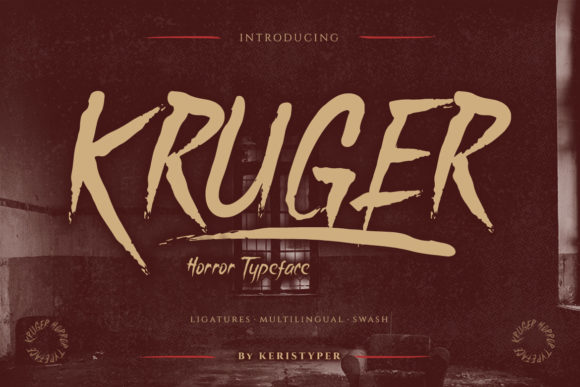
When it comes to making a bold typographic statement in design, the right font can set the tone and elevate the visual impact. Kruger, a brushed display font with a horror-inspired aesthetic, offers a unique blend of raw energy and spooky charm that can bring an eerie edge to creative projects. Designed primarily for short-form text applications, Kruger is ideal for designers looking to infuse their work with an unsettling yet stylish vibe.
What Is Kruger and What Makes It Stand Out?
Kruger is a brushed display font that mimics the appearance of hand-painted or splattered lettering, often associated with horror films, haunted house posters, and gothic-themed branding. Its distinctiveness lies in its texture-rich characters and irregular strokes, which give it a dynamic, unpredictable look. Unlike more polished sans-serif or serif fonts, Kruger embraces imperfection as part of its appeal, making it feel alive and expressive.
The font’s character set includes uppercase letters, numbers, and basic punctuation, all crafted with jagged edges and ghostly outlines that evoke a sense of unease. This makes Kruger particularly effective in contexts where a dramatic visual punch is needed without relying on lengthy text. The brush-like quality of each glyph adds depth and dimension, enhancing the font's versatility across different media formats.
Strengths of Kruger in Visual Design
- Spooky Aesthetic: Kruger is designed to exude a haunting atmosphere, making it perfect for Halloween-related content, horror movie titles, or dark-themed book covers.
- Brush Texture: The natural brush strokes give Kruger a tactile feel, helping it stand out in digital environments where flat typography dominates.
- High Contrast and Legibility: Despite its chaotic appearance, Kruger maintains strong contrast between characters, ensuring readability in key areas like logos and headlines.
- Short-Text Optimization: With its focus on uppercase letters and minimalistic structure, Kruger works best in short bursts of text, such as taglines, headers, or title cards.
Best-Fit Situations for Kruger
Kruger shines in specific design scenarios where its style complements the intended message. These include:
- Logos and Branding: For niche brands centered around horror, mystery, or gothic themes, Kruger provides an instantly recognizable and memorable visual identity.
- Social Media Graphics: Its high-impact visuals make Kruger suitable for attention-grabbing posts, especially during themed events or campaigns.
- Movie Titles and Trailers: Horror film titles often benefit from aggressive, textured fonts. Kruger delivers this with its rough, almost blood-splattered appearance.
- Book Covers and Titles: Whether for horror novels or thriller series, Kruger helps create a spine-chilling first impression.
Comparing Kruger to Other Display Fonts
In the world of display fonts, many options exist for creating bold, thematic statements. However, Kruger occupies a unique space due to its horror-centric design and brushed texture. When compared to other display fonts, several factors come into play:
1. Thematic Fit
Fonts like Creepster or Bungee Horror also lean into the horror genre but often do so with more exaggerated shapes or slasher-style features. While these might be more appropriate for extreme horror content, Kruger balances intimidation with elegance, making it adaptable to both traditional horror and more stylized interpretations.
2. Brush vs. Vector Styles
Kruger’s brushed characteristics differentiate it from vector-based horror fonts, which tend to have sharper, cleaner lines. Brush fonts like Kruger are typically used for artistic, expressive purposes rather than for body text or formal documents. They thrive in digital illustrations, motion graphics, and print materials where texture plays a role in the overall mood.
3. Use in Different Media
While Kruger is excellent for static designs, it may not perform as well in animated or layered compositions if additional stylistic adjustments are required. In comparison, some horror fonts are specifically tailored for animation or layering effects in software like Adobe After Effects or Photoshop. That said, Kruger’s clean separation of characters allows for easy manipulation in post-production settings.
Tradeoffs and Limitations to Consider
Despite its strengths, Kruger is not a one-size-fits-all solution. Designers should be aware of its limitations before incorporating it into their projects:
- Limited Character Set: Kruger lacks extended language support and special symbols, making it less practical for multilingual or technical content.
- Not Ideal for Long Text: The font’s irregular spacing and emphasis on uppercase letters make it unsuitable for paragraphs or long-form copy.
- Requires Strong Backgrounds: Due to its low contrast against certain colors, Kruger often needs a dark or contrasting background to maintain legibility and visual impact.
- May Be Too Intense for Some Audiences: Its horror aesthetic could alienate users who prefer subtler or more professional designs, limiting its use in corporate or mainstream branding.
Decision Factors for Choosing Kruger
Selecting the right font involves understanding the context, audience, and purpose of the design. Here are some questions to ask when evaluating Kruger as a potential choice:
- Does the project require a spooky or horror-themed visual element? If yes, Kruger is a strong contender.
- Will the font be used for short text only? Kruger is optimized for headlines, titles, and logos—not for body copy.
- Is the target audience likely to appreciate or relate to the brushed, aggressive style? Understanding user preferences is crucial to avoid misalignment with brand messaging.
- Can the design accommodate the need for a dark or moody background? Kruger benefits greatly from such a setting to enhance its visibility and mood.
Alternatives to Kruger and When to Use Them
If Kruger doesn’t quite fit your design goals, there are alternatives worth considering based on the specific requirements of your project:
For More Subtle Horror Vibes
Fonts like Chiller or Franklin Gothic Heavy offer a more restrained take on horror aesthetics. Chiller, for example, has a classic ghostly slant and is widely recognized, while Franklin Gothic Heavy brings a modern, edgy twist to darker themes. These fonts are better suited for projects that aim to evoke fear without overwhelming the viewer.
For Animated Projects
Designers working with motion graphics may find that vector-based horror fonts are easier to animate. Fonts like Beastie or Slasher are created with animation in mind and allow for smoother transitions and effects. Kruger, while still usable in such settings, may require extra effort to achieve the same level of polish.
For Multilingual or Technical Content
If you’re designing for a broader or non-English-speaking audience, consider fonts with full Unicode support and extended character sets. Options like American Typewriter or Roboto Black offer similar boldness and presence but with greater flexibility in terms of language and formatting.
Realistic Examples of Kruger in Action
Here are a few realistic examples of how Kruger can be effectively used:
- Logo Design: A boutique horror-themed bookstore uses Kruger for its logo, combining it with a red ink splatter effect to emphasize its name and attract fans of the genre.
- Social Media Posts: During October, a local haunted attraction runs promotional images with event names in Kruger, using the font’s intensity to build anticipation and excitement.
- Movie Poster Title: An independent filmmaker opts for Kruger in the main title of their upcoming thriller, leveraging its eerie appearance to draw attention at film festivals.
- Album Artwork: A metal band selects Kruger for the title of their new album, pairing it with a shadowy background and glowing text effects to create a cohesive, dark aesthetic.
Final Thoughts on Using Kruger Effectively
Kruger is a powerful tool for designers seeking to inject a sense of dread, rebellion, or mystique into their work. Its brushed, horror-like style is unmatched in delivering a visceral emotional response, particularly in visual-heavy industries like entertainment, publishing, and marketing. However, it’s important to remember that Kruger is most effective when used sparingly and in the right context.
Before finalizing Kruger for a project, evaluate whether its aggressive, handcrafted appearance aligns with your brand voice and design goals. Pair it with complementary elements like dark backgrounds, contrasting colors, or subtle lighting effects to maximize its impact. Also, ensure that any supporting text is in a more readable format to maintain usability and accessibility.
In summary, Kruger is not just another display font—it’s a stylistic choice that demands thoughtful application. When used correctly, it can transform a simple headline into a chilling visual experience, making it a valuable addition to any designer’s toolkit, especially those working within the horror or alternative design genres.